by Jack Bragen
[dropcap]I[/dropcap] enjoy the seasons from the comfortable perspective of living in my air-conditioned, heated apartment. I like to go out on my front porch and watch the rain. And I like to come back inside my apartment where it’s warm, safe and illuminated by artificial lighting.
I like the summer months, except for the times I am away from air conditioning. It feels good on a very hot day to sit under the chill breeze of a recently replaced air conditioner.
When the seasons change, I try to take some time to contemplate how fortunate I am that I have all of my basic needs met. In the United States at present, many persons with disabilities receive Social Security and HUD housing assistance. (Many cannot get benefits due to budget cuts in the government, or for other reasons.) It requires that a person be able to jump through the hoops of bureaucracy, and one of these hoops is paperwork.
Many are not government-savvy enough to follow the steps needed to receive assistance. I cannot imagine the amount of suffering I would feel if I were in a position of having no means of support, no steady supply of food and medicine, and no shelter from the elements.
In the nice neighborhood where I live, I see an increasing number of destitute people who stand by the side of the road with cardboard signs, begging, so that they can buy something to eat.
Many are veterans who have risked their lives on the premise of protecting this country. In the process of fighting these wars on our behalf, many have sustained post-traumatic stress. Imagine going off to war intending to serve your country, and then coming back home, only to be thrown away by an ungrateful society.
Human beings are fragile things. Video games and James Bond movies are misleading in their portrayal of what the human body can take. In adventure movies, heroes are able to take dozens of punches, knife wounds, bullets to the shoulder, and other offenses to the body, and yet are still able to get back up and fight some more.
This is not realistic. When things happen to our bodies and minds, we feel pain and shock, and we may not fully recover for many years, or decades, or at all. I still have pain from being bruised in a relatively minor auto accident I experienced six or seven months ago. I still have perceptible signs of the black eye that I sustained in a fist fight more than 20 years ago. I still suffer from the effects of a whiplash from being rear-ended in my car in 1987.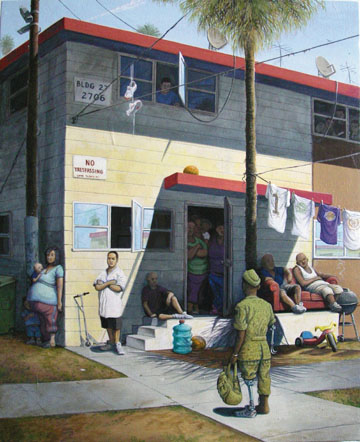
Human frailty means that we suffer the consequences when forced to push the envelope too far. Living without visible means of support, and going without food, water, shelter, sanitation and medical care are all things that can cause permanent, irreversible, physical damage to people.
Where are the fabled jobs that scoffers are repeatedly suggesting that homeless people obtain? Companies are impelled, by the axiom of making a profit to stay in business, to only employ the most efficient of applicants. The saying goes: “I’m not running a charity.” Thus, people who have sustained damage are likely not competitive in the job market.
We are obliged by observing simple truths to be grateful for what we have, and to not scoff at those who have less. Nor should we consider ourselves better people than those who have not had the same good fortune.