by Ariel Messman-Rucker
[dropcap]M[/dropcap]easure S was placed on the November ballot by a vote of the City Council at the very end of a contentious meeting. Mayor Tom Bates called for a vote around midnight, despite protests from Council members Max Anderson, Jesse Arreguin and Kriss Worthington that not everyone had been given the opportunity to speak.
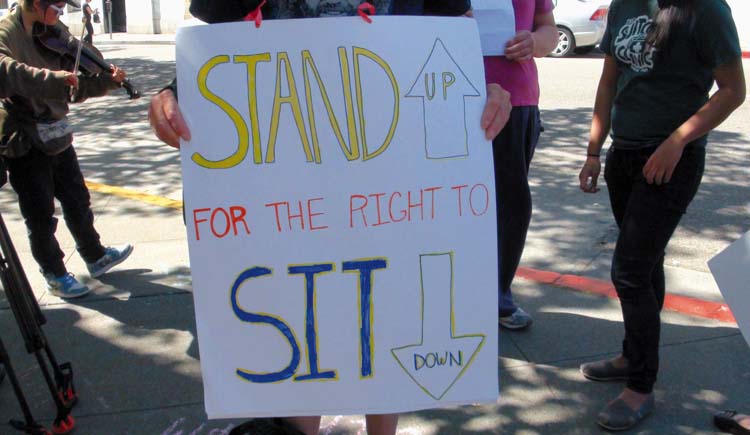
The American Civil Liberties Union has since sent a letter to the Berkeley City Council and the City Attorney claiming the council violated the Brown Act and its own rules when it approved the controversial sitting-ban measure.
By pushing this ballot measure through the council, Mayor Bates was thinking about the business interests in Berkeley and not the community, both Arreguin and Anderson asserted.
“I was personally very angry that the City Council just rushed this thing through in the dead of night without any discussion,” Arreguin said. “This is an incredibly important issue. It merited discussion by the City Council. There were alternatives on the table, but we weren’t even able to discuss those, and this is an incredibly divisive issue. “
Beyond the possible Brown Act violations, Anderson believes that an ordinance like this that has the ability to take away fundamental human rights should never be put to a vote at all.
Anderson said, “Any time you put the basic human rights that are enshrined in the Constitution and Bill of Rights up to a popular vote, you can expect that a majority that is either indifferent to the rights of those individuals or hostile to their rights will vote to rescind those rights.”
Although Bates was a major force behind putting Measure S before the City Council, and has signed ballot arguments in favor of the sitting ban, he is now reluctant to even talk about it.
Street Spirit spent more than a week trying to schedule an interview with the mayor, but after repeated assurances from his aide that the mayor would soon consent to an interview, Bates finally dodged the promised interview entirely. Instead, his aide forwarded us a two-sentence statement from Mayor Bates.
“I’ve been asked by our city merchants to put this measure on the ballot,” Bates said in his statement. “On November 6 the people of Berkeley will have the opportunity to decide the issue.”
Even that statement is very revealing. Street Spirit has reported several times that Bates had proposed the sitting ban at the behest of business leaders, and the mayor’s own statement now admits exactly that.
Not a single one of the council members who voted to put Measure S on the ballot would consent to an interview.
The key business executives who have influenced Bates to support the sitting ban also ducked repeated interview requests. John Caner, chief executive officer of the Downtown Berkeley Association, and Roland Peterson of the Telegraph Avenue Business Improvement District both refused to respond to interview requests.
To read the full article on Measure S click here.